
Front Door Styles, Colors, Glass, Materials, and Hardware for Mercer County Homes, Expert Guidance and Installation From Lawrenceville Home Improvement Since 1952
Your entry door is one of the first features people notice when they approach your home. It contributes to curb appeal, creates a transition between indoor and outdoor spaces, and helps establish the overall character of your property. Because the door is visible from both sides, choosing the right design involves more than selecting a color that looks attractive from the street.
The best entry door should complement your home’s exterior architecture while working with the colors, finishes, and design elements inside your entryway. It should also provide the durability, security, and weather resistance your home needs.
For homeowners throughout Mercer County and Central New Jersey, replacing an entry door can be an opportunity to update the appearance of a home without changing its entire exterior. By considering architectural style, color, glass, materials, hardware, and installation, you can choose an entry door that feels like a natural part of your home.
Match Your Entry Door to Your Home's Architectural Style
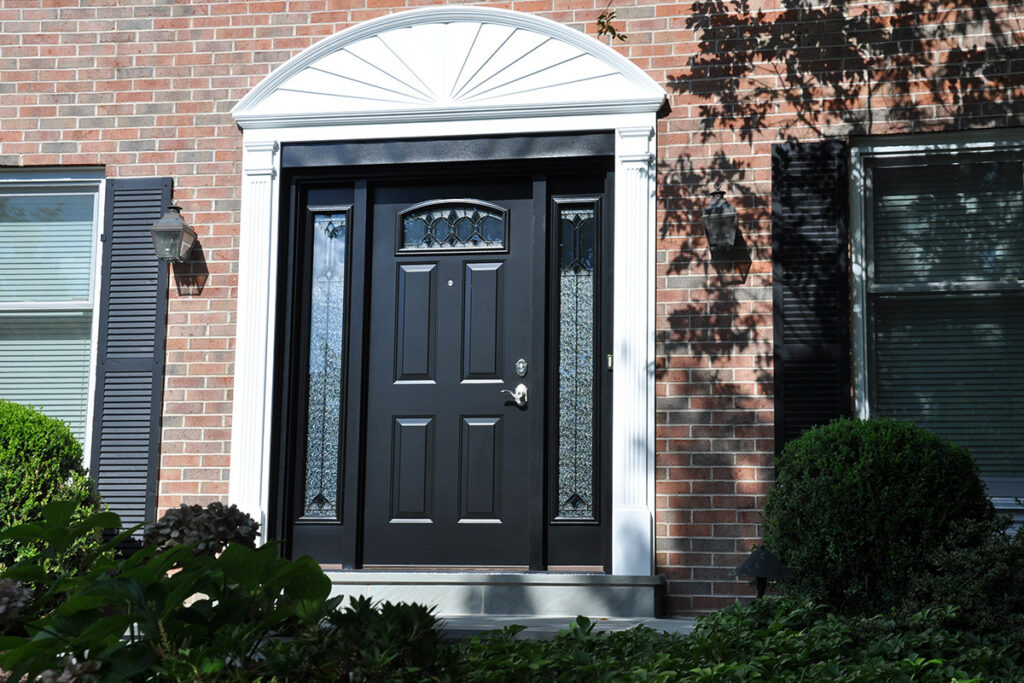
Before comparing individual door designs, consider your home’s existing architecture. An entry door should complement the proportions, details, and overall appearance of the property rather than compete with them.
Traditional homes often feature balanced facades, decorative trim, and classic architectural details. A door with raised panels, decorative glass, or a timeless finish may work well with these features.
Contemporary homes may benefit from cleaner lines, simpler panel designs, and larger glass sections. Transitional homes can combine traditional and modern elements, creating flexibility when selecting a door.
As you evaluate your options, consider:
- The overall shape and proportions of your home's front entrance
- The style of your existing windows
- Exterior siding, brick, stone, or other materials
- Trim colors and architectural details
- The amount of natural light around the entryway
- Whether the home has a traditional, contemporary, or transitional design
Your new door does not need to match every exterior feature exactly. Instead, look for a design that feels consistent with the home’s existing character.
If you are updating other exterior features at the same time, such as replacement windows or siding, consider how the new door will coordinate with those improvements. A cohesive design can make the entire exterior feel more intentional.
Choosing a Front Door Color That Works Inside and Outside
Color is one of the most noticeable aspects of an entry door. The right shade can highlight the entrance, coordinate with exterior materials, and create a welcoming first impression.
However, the color that looks best from the street may not be the only consideration. The interior side of the door also needs to work with your entryway’s walls, flooring, trim, and nearby furnishings.
Neutral colors offer flexibility and can complement a wide range of architectural styles. White, black, gray, and natural-looking finishes can create a timeless appearance, depending on the surrounding materials.
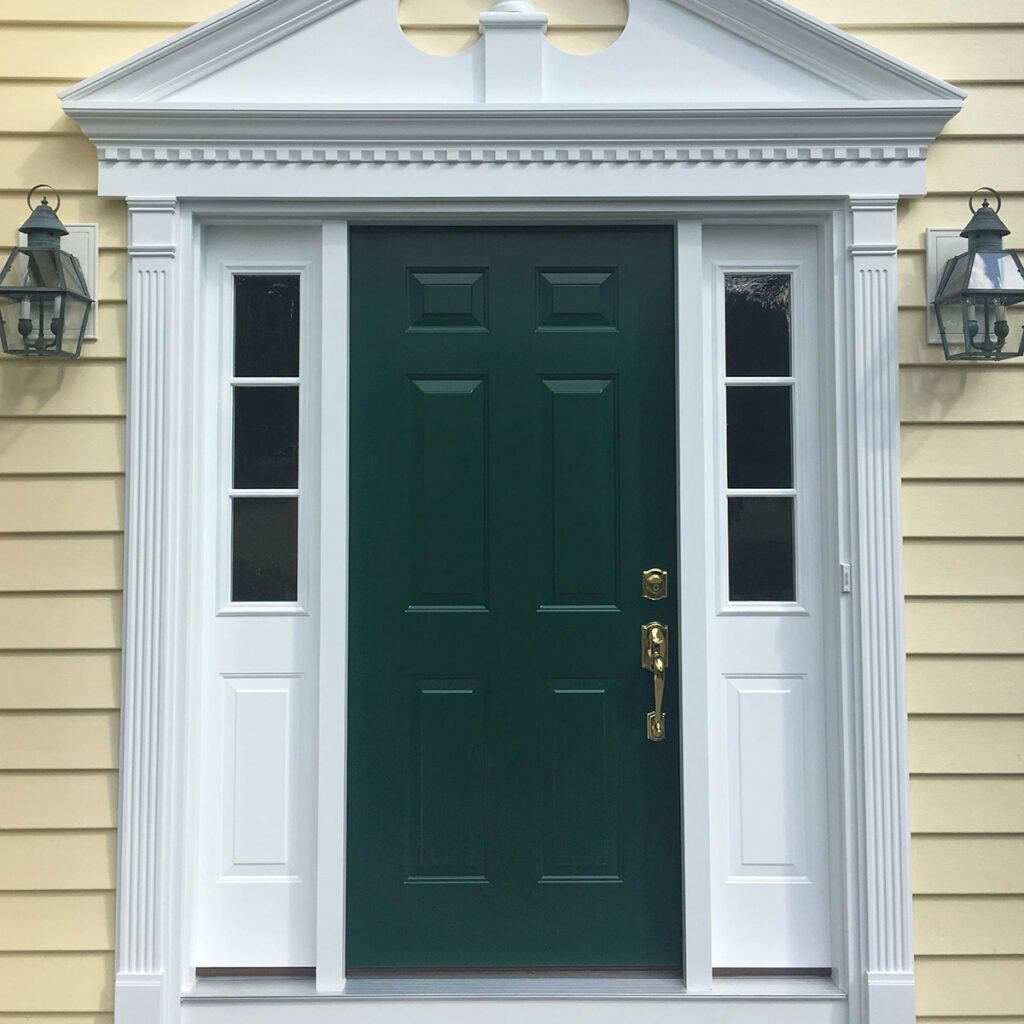
More distinctive colors can make the entrance a focal point. Deep blue, green, red, or other accent shades may work well when they complement the home’s exterior palette.
Before making a final decision, consider these factors:
- Exterior color scheme: Look at the relationship between the door, siding, brick, stone, shutters, and trim.
- Interior finishes: Consider nearby wall colors, flooring, baseboards, and interior doors.
- Natural light: Colors may appear different depending on the amount and direction of light.
- Architectural style: Some colors may feel more natural with a traditional home, while others suit a contemporary design.
- Long-term preferences: Choose a color you expect to enjoy rather than relying only on a passing trend.
Don't Overlook the Interior Side of Your Entry Door
Homeowners sometimes focus on curb appeal and overlook how much of the door they see from inside the house.
The interior side may be visible from a foyer, hallway, living room, or open-concept space. Its finish, panel design, and hardware should work with the surrounding interior rather than feeling disconnected from the rest of the home.
For example, a dark exterior door may create a strong focal point outside, while a lighter interior finish may blend more naturally with white trim and neutral walls. A wood-look finish may complement warm flooring or traditional interior details.
When selecting a door, consider how it will look from both sides of the threshold.
You may want to compare samples or product images that show the complete interior and exterior configuration. Looking at the door in the context of your home’s existing finishes can help you make a more confident choice.
It is also worth considering the door’s panel arrangement. A simple, understated design may work well in a home with minimal interior trim, while a more detailed door may complement traditional millwork and decorative molding.
Entry Doors With Glass, Sidelights, and Transoms
Glass can change the appearance of an entry door while influencing the amount of natural light that enters your home.
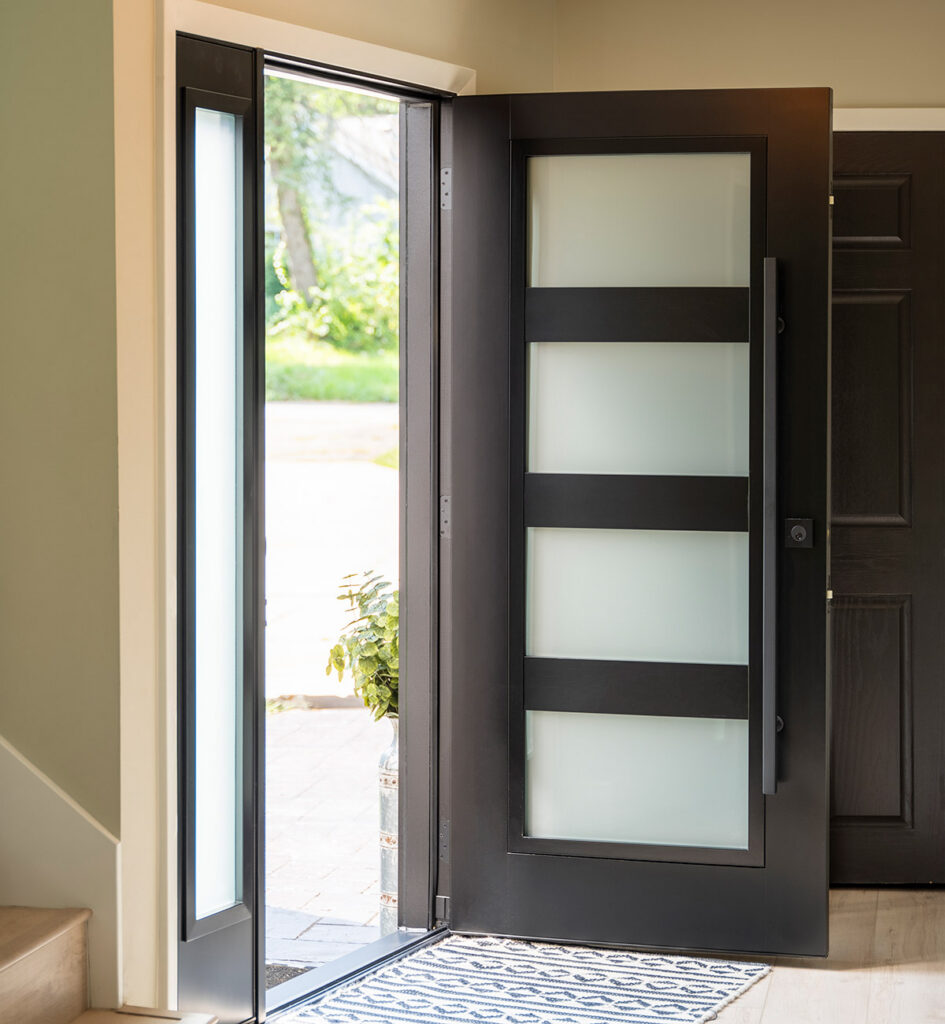
A door with glass panels may help brighten a darker foyer and create a more open feeling near the entrance. Decorative glass can also introduce texture or pattern without requiring a more elaborate door design.
Available configurations may include:
- Full-length glass panels
- Half-glass designs
- Small decorative glass inserts
- Multiple glass sections within a panel door
- Sidelights positioned beside the entry door
- Transom windows above the door
The best option depends on the layout of your entrance, the amount of light you want, and your privacy preferences.
Clear glass allows a more direct view through the door, while textured or decorative glass can provide a different balance of light and privacy. Some homeowners prefer limited glass near the upper portion of the door, while others want a larger glass area to brighten the entryway.
When comparing options, ask about the available glass configurations and their performance characteristics. The amount of glass, its design, and the product’s construction can all influence the overall look and function of the door.
Glass should be selected as part of the complete design rather than treated as an afterthought. A well-chosen configuration can complement the home’s architecture and make the entrance feel brighter and more inviting.
Fiberglass, Steel, or Wood: Choosing an Entry Door Material
Entry doors are available in different materials, each offering its own combination of appearance, maintenance requirements, durability, and performance.
The right choice depends on your priorities, the conditions around your entrance, and the style you want to achieve.
When comparing door materials, consider:
- Durability: How well is the product designed to handle regular use and exposure to the elements?
- Maintenance: What cleaning or upkeep will the finish require?
- Appearance: Does the material offer the colors, textures, and panel designs you want?
- Weather resistance: How is the door designed to handle moisture and changing temperatures?
- Insulation: What features are available to help limit unwanted heat transfer?
- Budget: Does the product fit your planned investment?
A door’s material is only one part of its performance. The quality of the complete door system, including its frame, weatherstripping, threshold, and hardware, also matters.
Central New Jersey’s changing seasons make it important to consider how an entry door will perform during both cold winters and hot, humid summers. Discuss the available options with a knowledgeable contractor to understand which products may suit your home’s conditions and your maintenance preferences.
Coordinate Your Entry Door With Windows, Siding, and Trim
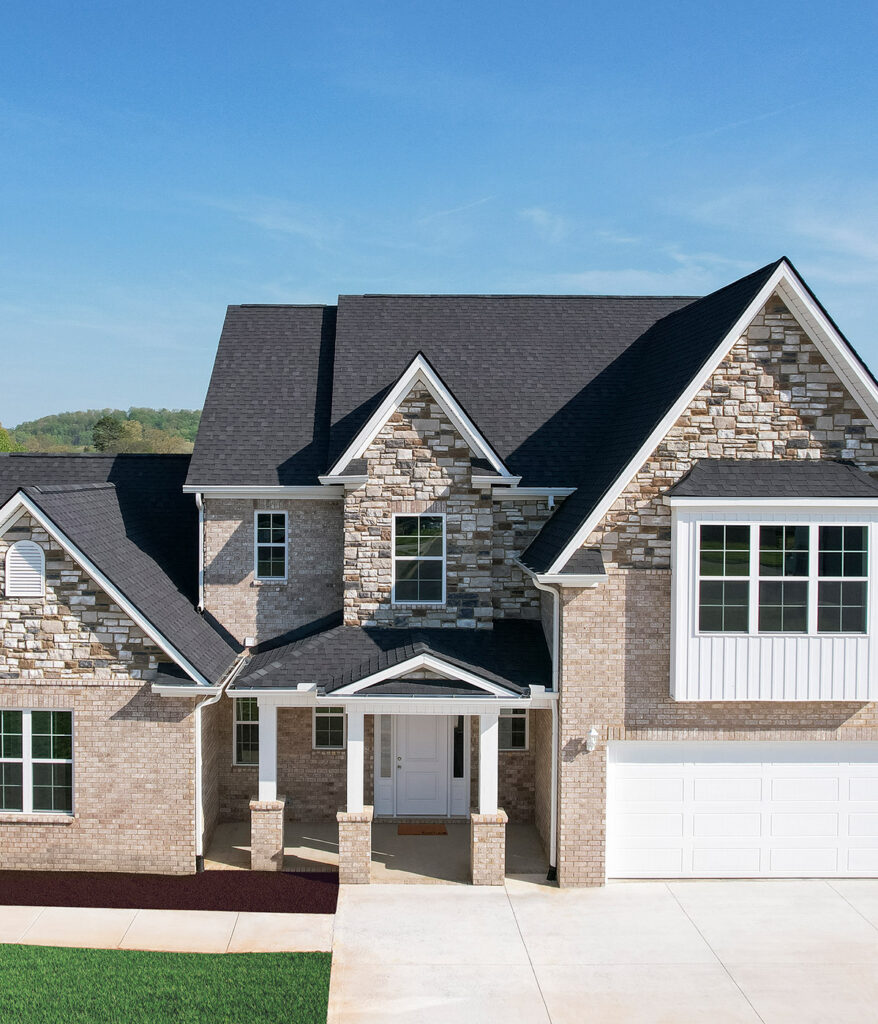
Your entry door should complement the other visible elements of your home’s exterior. Even a beautiful door can look out of place if its color, proportions, or details conflict with the surrounding materials.
Start by looking at the exterior as a whole. Consider whether the door should blend into the existing color scheme or stand out as an accent.
If your home has brick or stone, a door color that complements those materials can create a balanced appearance. Homes with siding offer additional opportunities to coordinate the door with trim, shutters, and other decorative elements.
Your windows are another important consideration. The door does not need to have the same design as your windows, but compatible colors and architectural details can help create a cohesive look.
For example, a traditional home with divided-light windows may suit an entry door with classic paneling or decorative glass. A more contemporary property may look better with a simpler door design and streamlined hardware.
If you are planning several exterior improvements, coordinate your choices before ordering products. This can help you compare colors and finishes together rather than making decisions separately and hoping they work well once installed.
Choosing Entry Door Hardware and Finishes
Door hardware may seem like a small detail, but it can influence the finished appearance of your entryway.
Handles, locksets, hinges, and other visible components should suit the door’s style and the surrounding finishes. Traditional doors may pair well with classic hardware designs, while contemporary doors often work with simpler shapes and cleaner lines.
Popular finish options can include black, bronze, nickel, brass, and other metallic tones, depending on the product.
When selecting hardware, consider:
- The color and finish of the door
- Other exterior hardware and lighting fixtures
- Interior finishes near the entryway
- Ease of operation
- Locking requirements
- The overall style of your home
Consistency can help create a polished look, but every fixture does not need to match exactly. The goal is to select finishes that work together without making the entrance feel overly coordinated.
Function should remain a priority. Choose hardware that is comfortable to use and appropriate for your home’s entry requirements. Your contractor can explain which hardware options are available with the door you select.
Balancing Style With Security and Weather Performance
Style is important, but an entry door also serves practical purposes. It provides access to your home, helps protect the interior from outdoor conditions, and should operate reliably.
When comparing doors, look beyond the exterior finish. Consider the construction of the complete door system and how its components work together.
Important features to discuss include:
- The strength and construction of the door
- Available locking hardware
- Frame condition and fit
- Weatherstripping around the perimeter
- Threshold design
- Available insulation and glass options
- Manufacturer warranty information
Proper installation is equally important. A door that does not fit the opening correctly may be difficult to operate or may not seal as intended.
During a consultation, ask how the existing opening will be measured and evaluated. If the surrounding frame or trim has damage, that condition may need to be addressed as part of the project.
The goal is to choose an entry door that looks appropriate for your home while meeting your practical needs for everyday use.
Entry Door Maintenance: What to Expect
Your preferred door style should also fit the amount of maintenance you are willing to perform.
Some finishes may require periodic attention to preserve their appearance, while other products may offer lower-maintenance surfaces. Exposure to direct sunlight, moisture, and weather can also influence how exterior finishes age.
Before selecting a door, ask about the care instructions for the specific product and finish.
Consider whether you prefer a painted appearance, a wood-look finish, or another available design. Review the manufacturer’s recommendations for cleaning and maintenance, and make sure you understand any requirements that could affect the door’s long-term appearance.
It is also useful to consider the surroundings. An entrance exposed to direct weather may have different maintenance needs from a protected entry beneath a covered porch.
Choosing a door with appropriate materials and finishes can help you balance appearance with the time and effort required to maintain it.
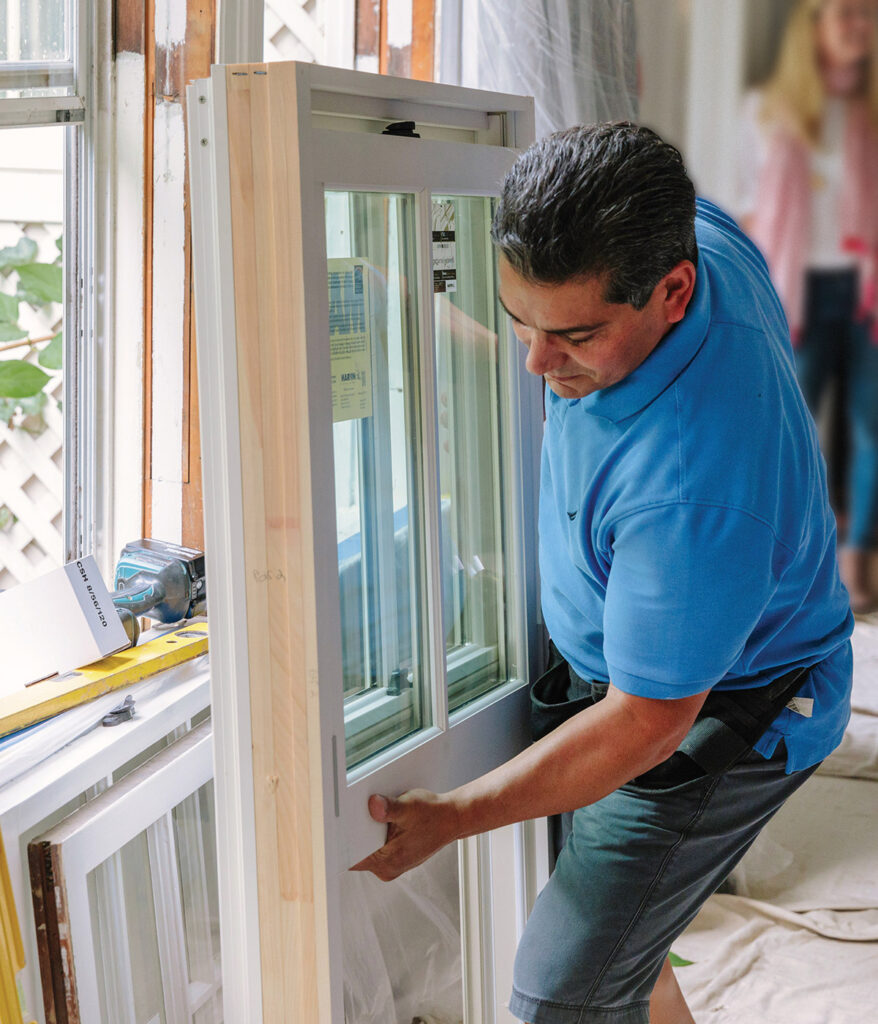
Why Professional Entry Door Installation Matters
Even a well-designed entry door needs proper installation to function as intended.
The opening must be measured accurately, and the door must be fitted, secured, and sealed according to the product’s requirements. Poor installation can affect operation, weather resistance, and the overall appearance of the finished entrance.
Professional installation helps address details such as:
- Accurate measurements
- Proper alignment within the opening
- Secure fitting of the door and frame
- Appropriate weather sealing
- Correct operation of hinges and locking hardware
- Attention to surrounding trim and materials
An experienced contractor can also identify existing conditions that may affect the installation, including deterioration around the frame or threshold.
Discussing installation before selecting a door can help you understand the scope of the project and the steps involved. It also gives you an opportunity to ask questions about the expected process, product care, and applicable warranty information.
Frequently Asked Questions About Choosing an Entry Door
Why Mercer County Homeowners Choose Lawrenceville Home Improvement
For more than 70 years, Lawrenceville Home Improvement has helped homeowners throughout Mercer County and Central New Jersey improve their homes with quality exterior remodeling products and professional installation.
Family-owned and operated since 1952, Lawrenceville Home Improvement understands that exterior improvements should combine appearance, performance, and practical value. Choosing a new entry door is an opportunity to improve curb appeal while selecting a product that suits your home’s architecture and everyday needs.
Homeowners choose Lawrenceville Home Improvement for:
- Family-owned and operated service since 1952
- Decades of exterior remodeling experience
- Quality replacement door options
- Professional installation services
- Recommendations based on each home's needs
- Service throughout Mercer County and Central New Jersey
Whether you want a traditional entry door, a contemporary design, or a style that combines elements of both, taking time to compare your options can help you find the right fit.
If you are considering a new entry door, Lawrenceville Home Improvement can help you explore available styles and discuss your home’s needs. Contact the team to learn more about entry door replacement and take the next step toward an entrance that complements your home inside and out.